Introducing 3nayan's AIM — AI Impact & Momentum Framework

The only integrated strategic system that turns AI investments into enterprise P&L.

Technology isn't the barrier. Alignment, measurement, readiness, and acceptance are.

Book a Conversation Explore the Framework
Take the Free AI Readiness Diagnostic 5 minutes  ·  30 questions  ·  Instant results & downloadable PDF
Why Most AI Initiatives Fail

Only a fraction of pilots ever scale. Budgets grow, impact stalls. AI stays tactical, never transformative.

The problems are structural — not technological. Here is what goes wrong:

🚫

No Pathway to Scale

No implementation roadmap, misaligned KPIs, and no system to link pilots to business results.

🗄️

Poor Data Quality

Incomplete, inconsistent, or unreliable data blocks AI from ever producing trustworthy outputs.

💸

Cost Overruns

Hidden integration and data costs derail momentum and erode executive confidence mid-programme.

🔒

CISO Pushback

Expanding data needs trigger late-stage security objections that stall or kill delivery entirely.

⚠️

Lack of Readiness

Organisations need to be prepared for the change — without readiness, teams hit structural blockers before impact.

The AIM Framework

From Vision to Measurable Impact

AIM brings together what to do, how to do it, and how to prove it — in one closed-loop system that connects AI execution to business performance and financial impact.

01

Readiness Assessment

Evaluates what's ready, what's not, and what must come first — surfacing capability, data, governance, and change gaps before investment is committed.

02

Implementation Roadmap

Defines the phased journey of execution across strategy, data, governance, risk, change, use cases, and measurement — tracked in business terms.

03

KPI Framework

~90 enterprise KPIs across 10 categories and 5 strategic clusters, each defined with purpose, ownership, and frequency — linked to OKRs and P&L.

04

AIM Maturity Model

Defines how organisations progress from ad hoc to optimised AI — connecting capability to P&L outcomes and revealing when to invest, pause, or accelerate.

Only when integrated together — assessment, roadmap, KPIs, and maturity form a closed-loop system. When strategy, measurement, and capability mature in sync, AI stops being an experiment and becomes part of the business engine.

Readiness Discipline · INSIGHT10

Organisational Readiness Assessment

Most AI transformations fail not due to weak models, but because organisations begin executing without structural readiness. The AIM Readiness Assessment — delivered as INSIGHT10 — is a rapid 10-day diagnostic spanning decisions, delivery, and dependencies.

It diagnoses eight dimensions of friction across your AI transformation, ensuring alignment to outcomes before execution is committed.

Solves: Unseen Weak Links. Surfaces early gaps so teams start strong and avoid predictable, costly failures — before they happen.
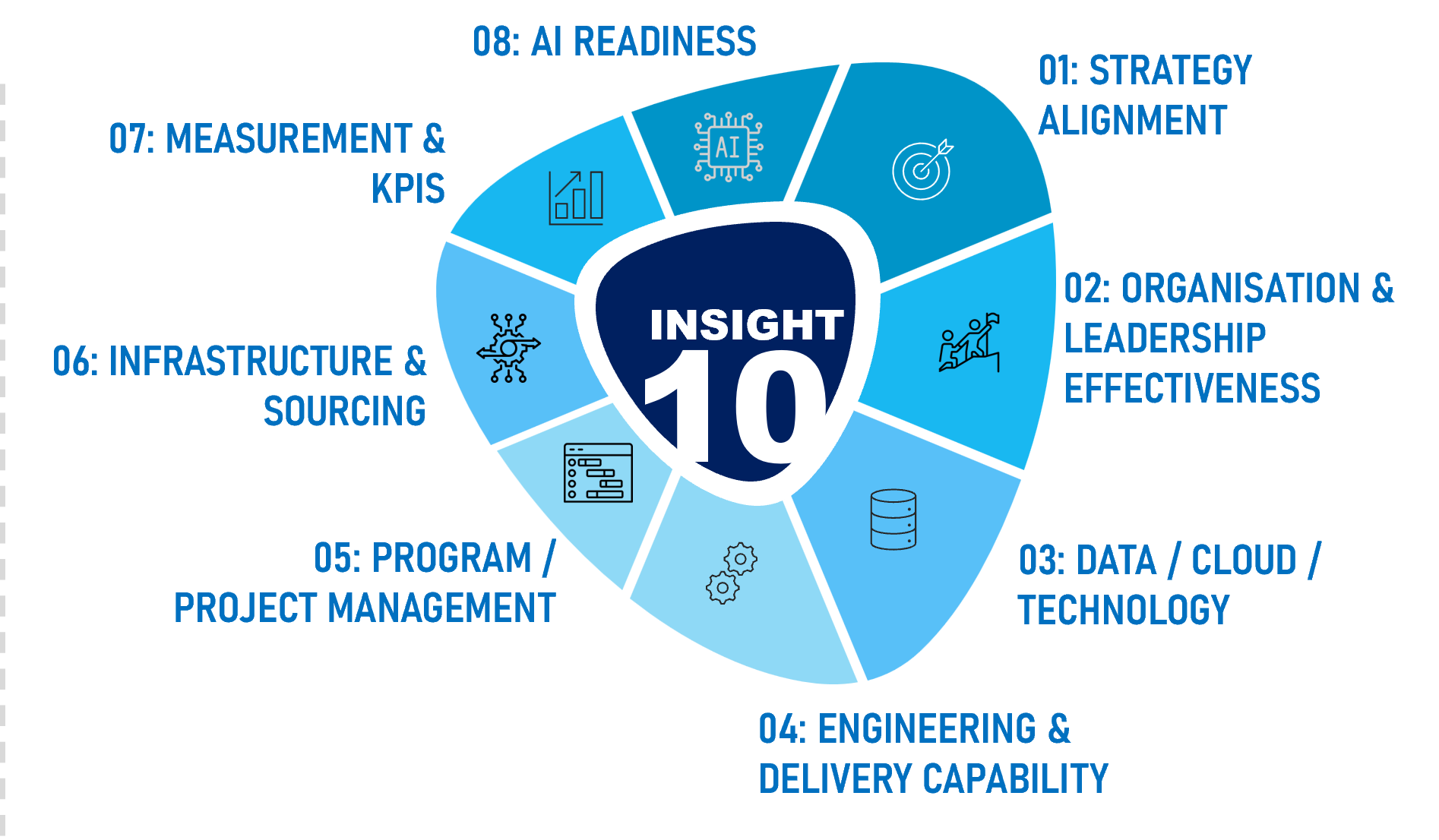
INSIGHT10 Diagnostic Wheel
INSIGHT10: A rapid 10-day diagnostic spanning decisions, delivery, and dependencies
Execution Discipline

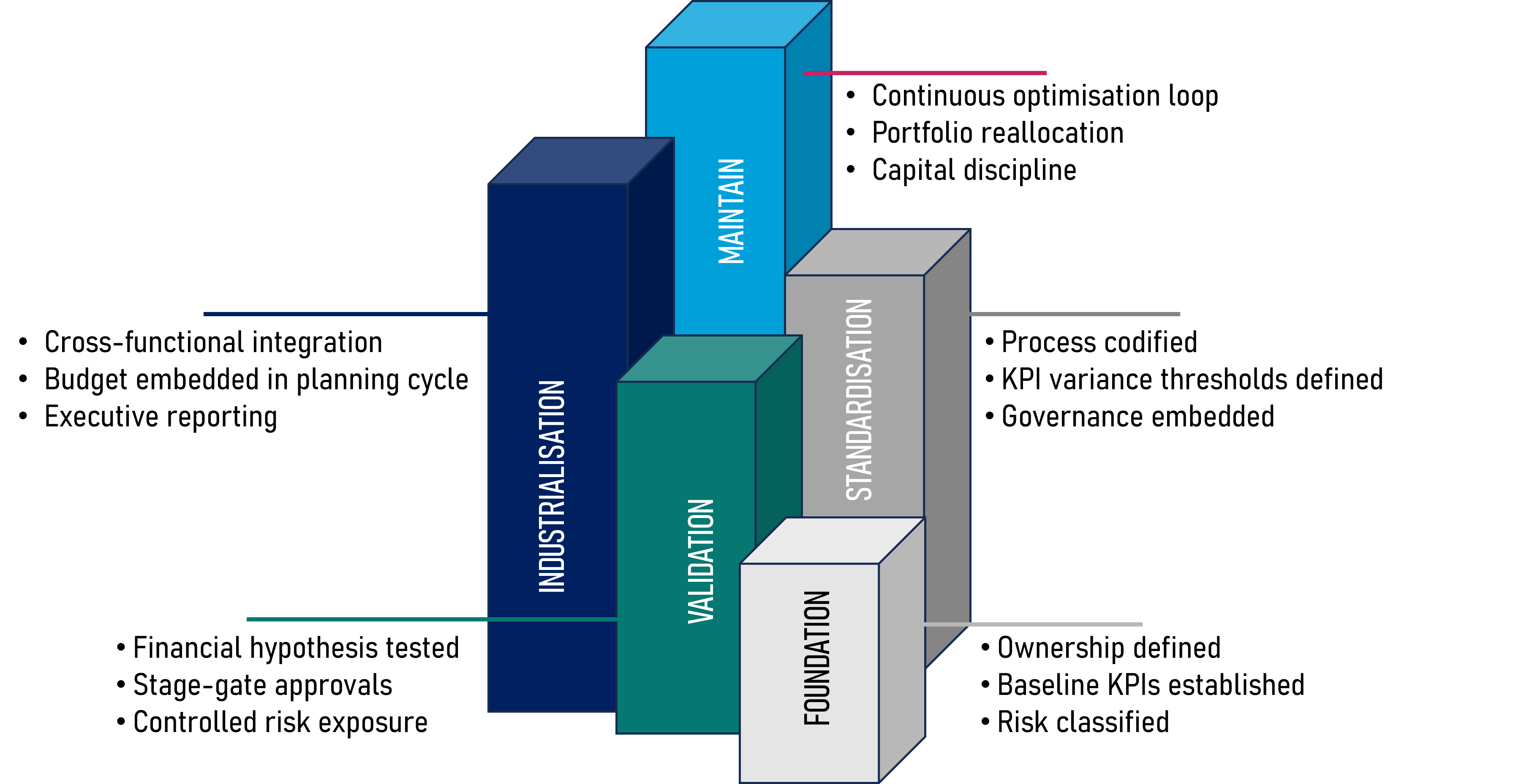
Integrated AI Implementation Roadmap

Most AI initiatives fail not because of technology, but because execution lacks structure, ownership, and financial traceability. The AIM Roadmap is a phased path that converts ambition into accountable delivery and measurable business results.

Execution is sequenced across five phases, each aligned to defined KPIs, ensuring progress is tracked in business — not technical — terms.

Foundation

Establish core enablers, data, and governance.

Validation

Prove business value through controlled pilots.

Standardisation

Scale what works, embed process discipline.

Industrialisation

Integrate AI into enterprise operations and P&L.

Maintain

Sustained, measurable business impact.

Solves: Fragmented Execution. From scattered pilots to a sequenced path that reduces wasted spend and accelerates time-to-impact.
AIM Implementation Roadmap
The roadmap is the control system that translates AI ambition into accountable business performance.
Measurement Architecture

KPI Framework for Measurement

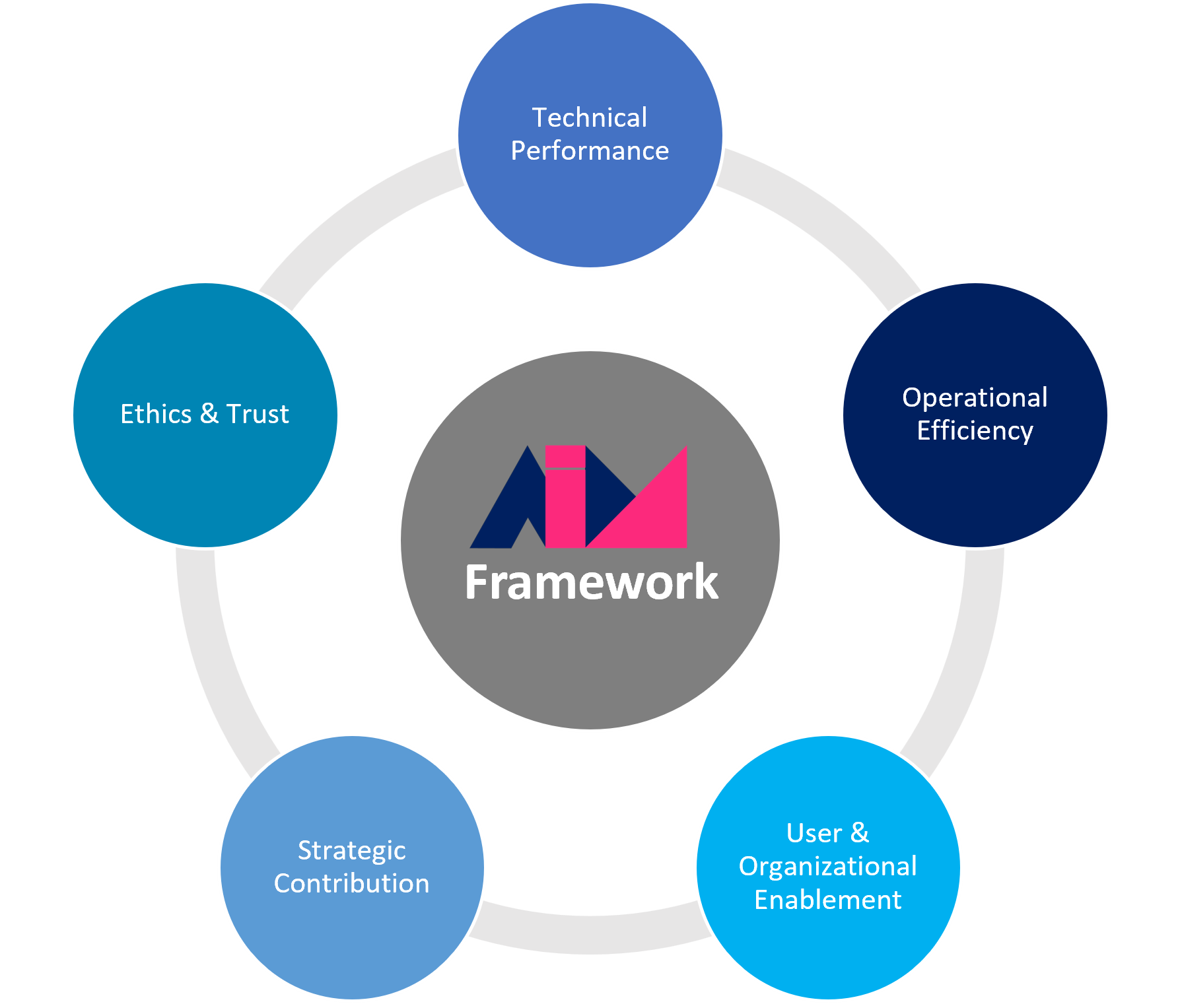
The AIM KPI Framework brings structure to AI measurement. ~90 enterprise KPIs across 10 categories, structured into 5 strategic clusters. Each KPI is implementation-ready, defined with purpose, ownership, and frequency.

Together they cover the full lifecycle of enterprise AI — from technical performance to strategic value — linking every metric directly to OKRs and P&L.

Technical Performance

Accuracy & performance, MLOps

Operational Efficiency

Efficiency & productivity, risk & compliance

User & Org Enablement

User adoption & engagement, organisational readiness

Strategic Contribution

Strategic alignment, strategic positioning impact

Ethics & Trust

Fairness & transparency, risk, ethics & governance

Solves: Misaligned Measurement. Shifts focus from activity to value, connecting AI outcomes directly to ROI and enterprise financial performance.
AIM KPI Framework
~100 enterprise KPIs across 10 categories, structured into 5 strategic clusters
Organisational Readiness

AI Maturity Framework

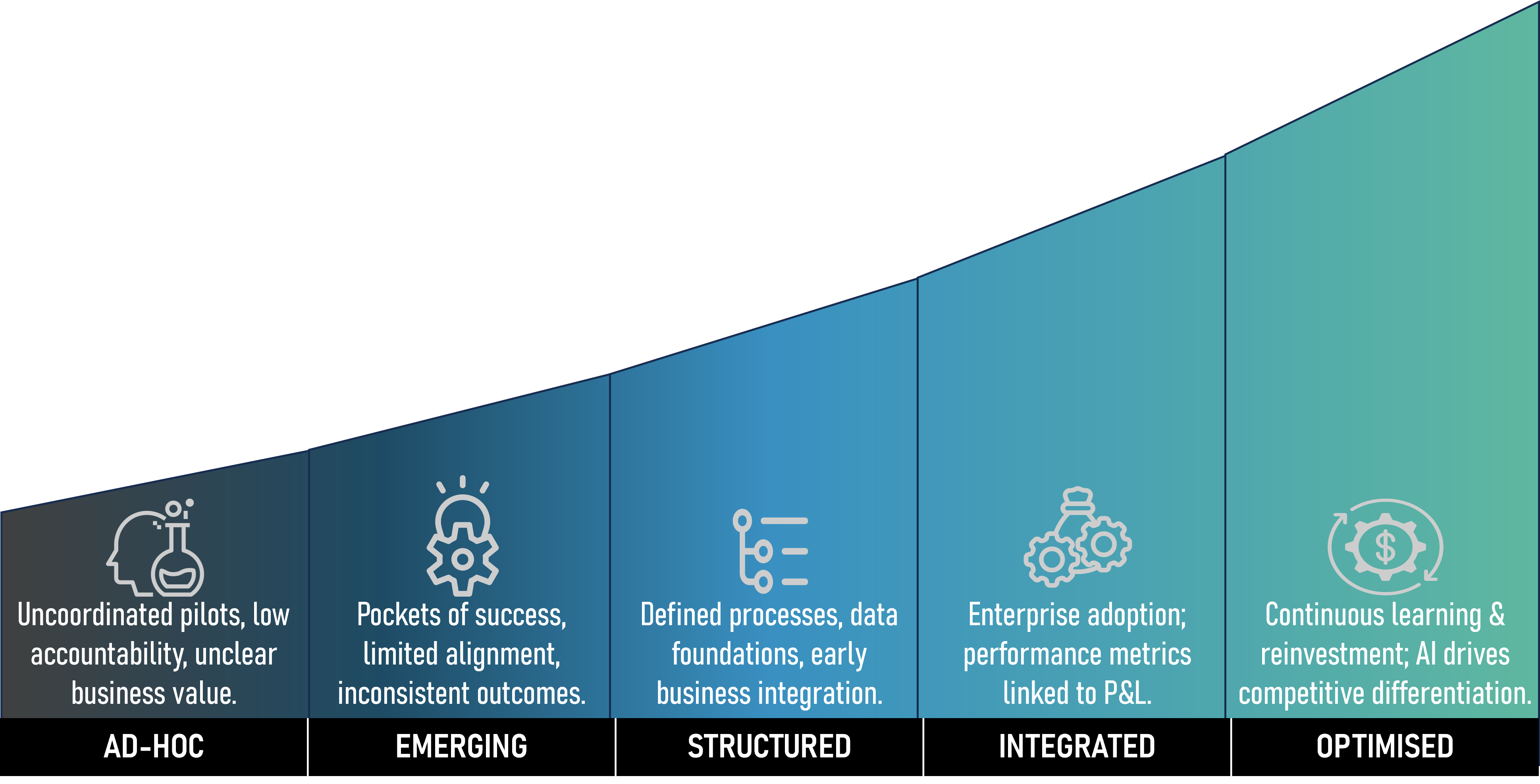
A clear view of what it takes to turn AI investment into repeatable business performance. Maturity determines whether AI efforts can sustain impact at scale — it connects capability to P&L outcomes, revealing when to invest, when to pause, and where returns accelerate.

Ad-Hoc

Uncoordinated pilots, low accountability, unclear business value.

Emerging

Pockets of success, limited alignment, inconsistent outcomes.

Structured

Defined processes, data foundations, early business integration.

Integrated

Enterprise adoption; performance metrics linked to P&L.

Optimised

Continuous learning; AI drives competitive differentiation.

Solves: Capability Drift. Builds the readiness and discipline to sustain enterprise-wide impact as AI expands across functions and markets.
AIM Maturity Framework
The AIM Maturity Framework links readiness to return — scaling decisions grounded in capability, not aspiration.
Where AIM Works

Applicability & Value Realisation

AIM scales wherever AI must deliver quantifiable, organisation-level value — across industries and maturity levels, driving scalable, repeatable business returns.

Application

AIM is designed for enterprise contexts where AI must deliver measurable business outcomes — not just proofs of concept.

🏦
Financial Services

Fraud detection, risk modelling, claims settlement automation

🏥
Healthcare

Diagnostics automation, claims processing, clinical workflows

🏭
Manufacturing

Predictive maintenance, supply chain optimisation

🛒
Retail

Dynamic pricing, demand forecasting, personalisation

🏛️
Government

Citizen services, energy grid management, compliance

AIM scales wherever AI must deliver quantifiable, organisation-level value.
Value Realisation Stages

AIM structures the journey from identifying potential to sustaining competitive advantage — in four progressive stages.

🔍
Potential Identified

Define where AI can shift cost or revenue lines. Align ambition to addressable business outcomes.

Proof of Value

Validate impact through focused pilots with clear metrics. De-risk before scaling.

⚙️
Operational Efficiency

Embed what works into processes and decision flows. AI becomes part of how work gets done.

📈
Scaled Adoption

Expand across functions, markets, or portfolios. Multiply impact without multiplying risk.

🏆
Strategic Advantage

Turn AI into a sustained performance differentiator. Capability becomes competitive moat.

AIM vs The Field

How AIM Compares to Industry Frameworks

Most AI frameworks address fragments — strategy, or readiness, or governance. AIM is the only framework that integrates all dimensions into a single system connected to financial outcomes.

ROI Discipline

Initiatives are pressure-tested against quantified financial impact before investment — not rationalised after it. No other framework mandates this.

KPI Integration

~90 KPIs across 10 categories, each linked to OKRs and P&L. Hyperscalers, BCG, Bain and McKinsey frameworks all score partial at best.

Readiness Assessment

INSIGHT10 provides a 10-day diagnostic across 8 friction dimensions before execution begins. Most frameworks skip this entirely.

Execution Sequencing

A 5-phase roadmap (Foundation → Maintain) with business KPIs at each gate. Competitive frameworks remain advisory, not executable.

Governance Integration

Risk, ethics, compliance (including RBI / MeitY / MANAV) woven into the framework — not bolted on at the end.

Strategy to P&L

The only framework that traces a direct line from AI strategy to revenue, cost, margin, and capital performance at enterprise level.

Want to see how AIM scores against McKinsey, BCG, Bain, KPMG, PwC, Gartner, Accenture, MIT Sloan, and others across every dimension? Request the full industry comparison report.

Request Full Comparison →
Why Clients Choose AIM

The Only Structured Path from AI Ambition to Measurable Value

1

Readiness Before Investment

Assessment exposes capability, data, governance, and change gaps early — before spend is committed.

2

ROI Defined Up Front

Initiatives pressure-tested against quantified financial impact, with KPIs tied to revenue, cost, margin, and capital.

3

Sequenced for Impact

Execution follows a structured roadmap aligned to KPIs — progress tracked in business, not technical, terms.

4

Maturity Compounds Returns

Capabilities evolve so value expands across functions and markets rather than plateauing after initial pilots.

AIM converts AI spend into defensible enterprise performance. Together, they turn AI from experimentation into sustained business advantage.

Get in Touch

Let's Talk About Your AI Journey

Whether you're evaluating readiness, scaling pilots, or need a structured path to enterprise AI impact — we'd like to understand your context and show you how AIM applies.